Open to Director and Senior Product rolesToronto or remote

AI products that survive contact with the real world.

Director / Senior Product Manager — AI platforms, integrations and connected hardware. 15+ years across engineering and product, 10+ of them in product roles.

I still build. This site, its scheduler and its analytics are mine.

Ravinder Pal Singh Saini
10,000+
locations live on the CentricOS integration layer, inside a 30,000-site estate
$89M
annual partner technology portfolio under my integration roadmap
69%
integration-configuration support tickets — reversing a decline in onboarding throughput
6
later patents cite my 2015 filing, including Samsung and Shiseido
01  /  FEATURED WORK

Six case studies. Six different kinds of decision.

A data failure with no error signal. A knowledge-delivery problem disguised as a headcount one. A model that had to hold up under real lighting. A hardware gate path with no room to correct. A chip shortage aimed at 40% of the revenue. And a threshold on a device that had to wake a sleeping infant.

Three are AI and platform work, four touch connected hardware, one is both. Filter if you only care about one side.

Role
Senior Product Manager, Integrations & AI
Org
Compass Digital · Toronto
Team
5 cross-functional squads — ~25–30 engineers incl. QA, 4 designers, 1 associate PM
Partners
Global Payments, Agilysys, Volante, Grubhub, Transact, Amazon, Google
Product
CentricOS integration layer — live at 10,000+ locations

Context

CentricOS is the integration layer behind Compass's POS and kiosk estate. Its job is to publish menu and configuration changes out of the backend and into partner systems. It runs live at 10,000+ locations, inside a 30,000-site, 292,000-user North American estate.

The problem

Tickets kept arriving about synchronization delays. Publishes were sometimes late; sometimes the end-to-end integration broke outright. The mechanism underneath was polling — and the failure mode was more interesting than a wrong value.

The partner system would drop a process and send no acknowledgment at all. Nothing reported an error. From our side the publish looked sent. From the site's side, the menu was simply stale. The data quality problem was an absent signal, not a bad one — which is why it never showed up cleanly in a ticket queue.

Approach

The partner move came before the engineering move. I asked the partner to build a dashboard — on their side — exposing the KPIs that measured our SLAs, and we reviewed it weekly.

  • An SLO breach stopped being a claim I was making about their system and became a fact on a screen we were both looking at.
  • The weekly cadence moved the conversation from incidents to trends — from "this store is broken today" to "this is drifting."
  • Only once we shared instrumentation did the joint engineering work have a scoreboard to land against.

What we built

We replaced polling with webhooks. State changes propagated with acknowledgment, instead of being inferred from a poll that might silently never have run — so a dropped process announces itself instead of hiding.

What I'd take from it

"Get to shared instrumentation with the partner first. You can't fix a data quality problem that you and your partner are describing differently — and silent failures are the ones that never make it into a ticket at all."
Role
Senior Product Manager, Integrations & AI
Org
Compass Digital · Toronto
Starting point
A goal, not a product idea — "accelerate site onboarding"
Adoption
150+ implementation team members running site deployments
Headline metric
69% fewer integration-configuration support tickets

Context

The brief was as open as briefs get: accelerate site onboarding. Velocity was slowing and nobody could say why. So the first work wasn't building — it was diagnosis.

What the diagnosis found

Implementation teams could not get the right information at the right time. Configuration knowledge was scattered across team wikis, support tickets and tribal memory — every team had its own.

It surfaced as open support tickets, but the tickets undercounted the real cost. The expensive part was the conversations: stop, ask, wait, get unblocked hours or days later — repeated on every single deployment. That reframed the goal: this was a knowledge-delivery problem, not a headcount problem.

Build one — the corpus

I shipped Orbit, which pulled the scattered configuration knowledge into one system. It solved where the knowledge lived. The corpus it created turned out to be the necessary foundation for everything that followed — but on its own, finding the right piece in time was still the bottleneck.

Build two — the distribution

The step that moved the number was changing how the knowledge reached people. I built an internal, IAM-gated MCP server exposing CentricOS operations data to LLM agents — putting answers inside the tools implementation teams were already working in, instead of asking them to go somewhere else to look.

Because people would trust it mid-deployment, it needed a quality layer, not just a retrieval layer:

  • Tool-invocation accuracy moved from ~85% to 93%.
  • A 100-question golden eval set on a biweekly refresh.
  • Confidence-threshold abstention with gap logging — the system says "I don't know" and records what it didn't know, which becomes the next content backlog.
  • Per-tool P95 latency budgets.
  • Authorization treating role and data scope as orthogonal axes, resolved server-side from the authenticated principal, with on-behalf-of exchange so the gateway holds no standing credentials.

Impact

  • 69% reduction in integration-configuration support tickets.
  • Reversed a decline in monthly onboarding throughput — the metric that actually gated how fast new sites went live.
  • 150+ implementation team members running site deployments adopted it — the people at the forefront of getting sites live.
What I'd take from it

"The goal never moved: get the right answer to the right person at the moment they're blocked. Orbit solved where the knowledge lived; the MCP layer solved whether it arrived in time. It took both."

Role
Senior Product Manager, Integrations & AI — vision, strategy and execution
Org
Compass Digital · Toronto
Stack
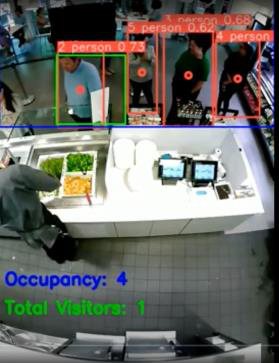
YOLO detection, DeepSORT tracking, Google Coral on-device inference
Stage
Pilot-scale in-house platform (0→1)

Context

Operators at high-traffic dining sites had no real-time visibility into wait times or foot traffic. Staffing and layout decisions were made on instinct and lagging reports.

The question

From a blank sheet: could the camera infrastructure already installed be turned into an operational-intelligence layer rather than a security artefact?

Approach

  • Led vision, strategy and execution of an in-house edge Vision AI platform — YOLO for detection, DeepSORT for tracking, running on Google Coral hardware.
  • Chose edge over cloud deliberately: privacy and latency both pointed the same way. Frames are processed on-device; only counts and timings leave the site.
  • Owned model selection, accuracy monitoring and the retraining loop in production — plus the operator-facing analytics that made any of it usable.
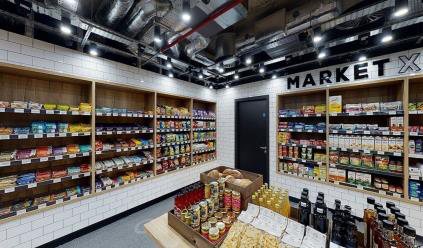
  • Separately piloted frictionless retail by integrating Amazon Just Walk Out stores with our in-house apps.
Edge vision AI output: detection boxes over a live serving line with occupancy and visitor counts overlaid
Live output from the edge platform — detection and tracking over a real serving line, with occupancy and visitor counts derived on-device.
Autonomous frictionless-checkout market store interior
Frictionless-checkout pilot — Amazon Just Walk Out integrated with our in-house apps.

Designing for the room, not the lab

Controlled-test accuracy did not predict performance under real lighting and real crowd density. So I made real-world data collection and a retraining loop a funded line item rather than a contingency, and held the platform to production monitoring rather than benchmark scores. That decision is what made the numbers usable to an operator.

Outcome

A pilot-scale platform producing wait-time and visitor-count analytics from live camera streams, in messy real environments rather than a lab.

What I'd take from it

"In the field, monitoring discipline matters more than model novelty. Budget for the gap between lab metrics and production from day one — it's a certainty, not a risk."

Role
Product Manager — Sensors & Smart Thermostat
Org
ecobee · Toronto
Timeline
March 2020 – October 2021
Ownership
Pricing and P&L for the SmartSensor line
Stage
0→1, newly launched

The product

The SmartSensor line uses thermal sensing to detect occupancy — that isn't a feature bolted onto the product, it's the mechanism the product runs on. Getting the sensing right and getting the certification right were the same job.

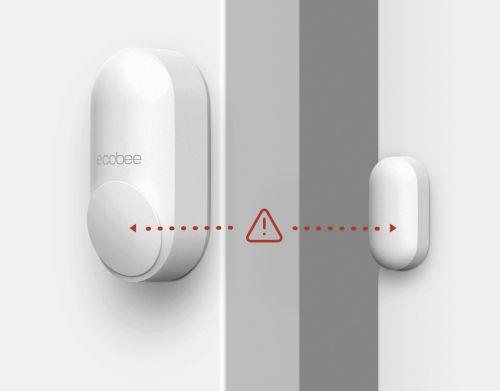
ecobee SmartSensor mounted beside a door frame
The SmartSensor line — thermal sensing for occupancy detection, taken from requirements through FCC certification.

What I owned

  • Translating business requirements into technical requirements the embedded, software and hardware teams could each build against in parallel — the coordination problem that decides whether a hardware schedule holds.
  • BOM optimization, where every component choice is simultaneously a cost decision, a supply decision and a performance decision.
  • The full qualification path: EVT → DVT → PVT → field trials → FCC certification for the target markets.
  • Pricing and P&L for the line — not just the spec, the economics.
  • Defining the product success metrics, and partnering with marketing and engineering on go-to-market.

Why the gates matter

Software lets you ship and correct. Hardware doesn't. Each gate exists to make a specific class of failure expensive now rather than catastrophic after tooling — EVT proves the concept works at all, DVT proves the design is manufacturable, PVT proves the factory can actually repeat it, field trials prove the thing survives a real home. The temptation on every schedule is to compress one of them. The discipline is knowing which risk you're accepting when you do.

A note on metrics

The line was newly launched and genuinely 0→1, so there is no mature adoption data here and I won't manufacture any. What I can point to is the ownership: requirements, BOM, every gate, certification, pricing and P&L.

What I'd take from it

"On hardware, the schedule is set by the gate you're least prepared for. The PM's job is to know which one that is six weeks before engineering does."

Role
Product Manager — Sensors & Smart Thermostat
Org
ecobee · Toronto
Product
Core thermostat line — a different product from the SmartSensor
Stake
~40% of company revenue · ~6 months of inventory left

Context

During COVID the EV surge consumed global microcontroller supply. Our preferred MCU became unobtainable for months.

It sat inside a core thermostat product line representing roughly 40% of company revenue, with about six months of inventory left. That is not a procurement problem with a product consequence — it is a product problem wearing a procurement costume, and it lands on the PM.

Approach

  • A low-cost variant built on alternate components, so there was a shippable product that did not depend on the constrained part.
  • A deliberate multi-microcontroller design — so that no single procurement failure could halt the line again. The mitigation went into the architecture, not the purchase order.
  • Ran EVT, DVT and PVT at hyper speed against the inventory clock, without dropping the qualification gates.

Outcome

The core line kept shipping through the shortage, and came out of it structurally harder to stop.

What I'd take from it

"Designing for substitution is cheaper than sourcing heroics. A second qualified microcontroller costs BOM margin once; a stopped line costs the quarter."

Role
Product Manager — Connected Cameras, Baby Monitors
Org
CWD · Toronto
Timeline
January 2017 – March 2020
Ownership
$30M portfolio — pricing, budget and P&L as explicit KPIs
Rating
4.75 / 5

The product

Oma Sense is the first breathing baby monitor designed and manufactured in Canada. It's an accelerometer-based wearable that clips to an infant's diaper or clothing and detects breathing motion, for infants 0–6 months, aimed at reducing SIDS risk.

If breathing stops, the device does two things at once: it vibrates to rouse the infant, and it sounds a loud audible alarm to bring the caregiver. Built with medical-grade plastics in an ISO 13485 facility.

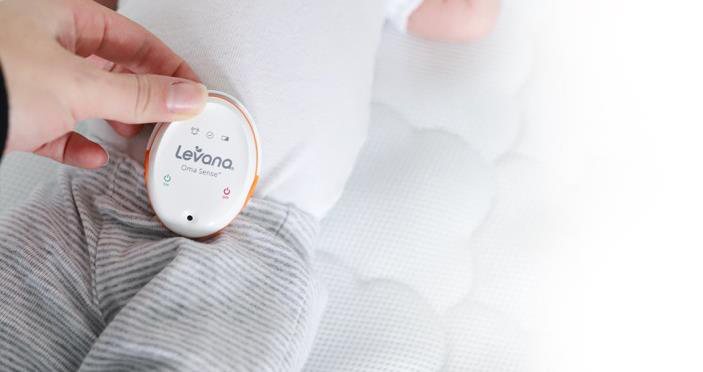
Oma Sense wearable breathing monitor clipped to an infant's clothing
Oma Sense — accelerometer-based breathing detection, worn on the clothing rather than under the mattress.
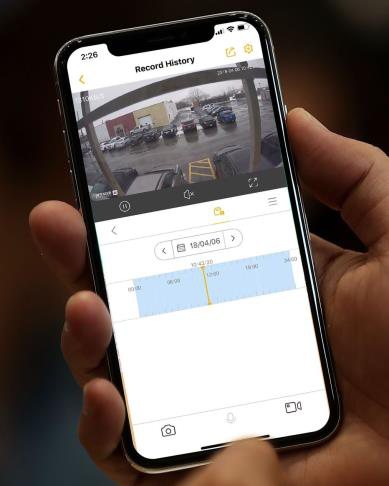
Connected IP camera companion app showing recorded history timeline
The wider connected-camera portfolio — IP cameras and companion apps across Best Buy, Walmart and Amazon.

The decision that defined it

Newborns do not breathe like adults. They breathe irregularly — they pause for a few seconds and then resume, and that is normal. So the product question was never "can we detect breathing." It was: how long is a pause allowed to last before we wake a sleeping baby and alarm its parents?

  • We baselined detection against real infant breathing in field trials, not synthetic signals.
  • Then made explicit judgment calls on alarm-trigger thresholds, balancing missed events against false alarms.
  • Both directions carry a real cost. A missed event is the reason the product exists. A false alarm at 3am is how the product ends up in a drawer — and a device in a drawer protects no one.

The portfolio around it

  • Owned a $30M portfolio across Best Buy, Walmart and Amazon, with pricing, budget and P&L as explicit KPIs.
  • Grew annual portfolio revenue by $7M — the mechanism was exiting low-margin, inventory-heavy SKUs and concentrating on high-margin lines, which won retail shelf space. (Revenue attribution is multi-variable; that was the lever I pulled.)
  • 10% SoC cost savings through vendor negotiation, and supplier diversification after a partner bankruptcy cut off supply — multi-sourced CMs with lead-time and inventory controls.
  • Owned the two-way audio path across the line, held to strict latency, intelligibility and noise specs enforced by incoming QC.
What I'd take from it

"On a safety device the threshold is the product. Everything upstream is engineering; the number you choose is the judgment, and you own it in both directions."

02  /  ABOUT

AI product work, grounded in engineering.

Most of my recent work is AI and platform: an edge computer-vision platform I took from a blank sheet to live camera streams, and an internal MCP server that put operations data inside the tools implementation teams already worked in — with the eval sets, abstention policy and latency budgets that make an agent trustworthy enough to use mid-deployment.

That sits on top of the integration layer for CentricOS at Compass Digital — POS and kiosk integrations live at 10,000+ locations inside a 30,000-site estate, against an $89M annual partner technology portfolio.

Before that: thermal occupancy sensing at ecobee, a $30M connected-camera and baby-monitor portfolio with full P&L at CWD, and a wearables company I founded that Forbes, BNN and CBC covered. 15+ years across engineering and product, 10+ of them in product roles.

I started as an electrical engineer commissioning battery manufacturing plants across Asia and the Middle East. Standing on a plant floor at 2am with a PLC that won't cooperate teaches you something about requirements that a spreadsheet never will — and it's still how I read an engineering estimate.

I write code. Not as a hobby claim: I prototype before I write a PRD, and the SaaS in the ventures section below is one I designed, built and shipped alone.

M.Eng., Industrial Engineering

University of Windsor, Ontario, Canada
2012 – 2015  ·  GPA 92.87%

B.Tech., Electrical & Electronics Engineering

NIT Karnataka, Surathkal, India
2006 – 2010

Patent & recognition

Named inventor on WO2016/063190 — ear-based biometric sensing. Cited by 6 later patents including Samsung and Shiseido.

Dale Carnegie Breakthrough & Best Performance Award (2017).
03  /  EXPERIENCE

Fifteen years, five floors of the same building.

Platform team, founder's chair, retail portfolio, hardware lab, plant floor. Different altitudes on one problem: making something work reliably in someone else's hands.

Senior Product Manager — Integrations & AI
Compass Digital (Compass Group) · Toronto, Canada
Oct 2021 – Jul 2026 · ~5 years
  • Owned the CentricOS integration layer — POS and kiosk integrations live at 10,000+ locations within a 30,000-site, 292,000-user North American estate, against an $89M annual partner technology portfolio.
  • Led roadmap and delivery with Global Payments, Agilysys, Volante, Grubhub, Transact, Amazon and Google.
  • Replaced polling with webhooks across the partner integration layer after diagnosing silent, unacknowledged publish failures — getting the partner to instrument our SLAs on their own side first.
  • Led vision, strategy and execution of an in-house edge Vision AI platform (YOLO, DeepSORT, Google Coral) for wait-time and visitor-count analytics at pilot scale; piloted Amazon Just Walk Out frictionless stores.
  • Consolidated scattered configuration knowledge into Orbit, then built an internal, IAM-gated MCP server putting those answers inside the tools implementation teams already used — adopted by 150+ implementation team members running site deployments.
  • Cut integration-configuration support tickets by 69%, reversing a decline in monthly onboarding throughput.
  • Integrated vending machines and micro-markets with the Thrive app to enable Scan & Pay.
  • Led 5 cross-functional squads — ~25–30 engineers including QA, 4 embedded designers — and mentored an associate product manager.
See case studies 01–03 →
Product Manager — Sensors & Smart Thermostat
ecobee Inc. · Toronto, Canada
Mar 2020 – Oct 2021
  • Launched the SmartSensor line (0→1) — thermal sensing for occupancy detection — owning pricing and P&L for the line.
  • Ran the full hardware path: business-to-technical requirements, BOM optimization, EVT, DVT, PVT, field trials and FCC certification for target markets.
  • On a separate product — the core thermostat line, ~40% of company revenue — kept shipping through the microcontroller shortage via a low-cost alternate-component variant and a deliberate multi-MCU design.
  • Tracked embedded, software and hardware development in parallel and defined the product success metrics.
See case studies 04–05 →
Product Manager — Connected Cameras & Baby Monitors
CWD Limited · Toronto, Canada
Jan 2017 – Mar 2020
  • Owned a $30M portfolio with pricing, budget and P&L as explicit KPIs, across Best Buy, Walmart and Amazon.
  • Launched IP cameras and Oma Sense — the first breathing baby monitor designed and manufactured in Canada (4.75/5, medical-grade plastics, ISO 13485 facility).
  • Grew annual portfolio revenue $7M by exiting low-margin, inventory-heavy SKUs and concentrating on high-margin lines that won shelf space; 10% SoC cost savings through vendor negotiation.
  • Diversified suppliers after a partner bankruptcy cut off supply — multi-sourced CMs with lead-time and inventory controls; IEEE1725-qualified cells consigned to vendors.
  • Functioned as R&D lead for an ~8-person product group in a sub-100-person company, reporting to a Director and the CEO; hired across product, QA and engineering.
See case study 06 →
Founder & Chief Executive Officer
BioSensive Technologies Inc. · Waterloo, Canada
Oct 2014 – Jan 2017
  • Designed and launched the Ear-O-Smart wearable — $2M valuation, a $70K government grant and ~$100K in angel funding.
  • Named inventor on WO2016/063190 (ear-based biometric sensing), since cited by 6 later patents including Samsung and Shiseido.
  • Ran hardware development ground-up with a supply chain across China and Canada.
  • Built the Worknosis heat-stress monitoring system (B2B subscription) across 3 manufacturing facilities — XBee mesh with high-gain antennas extended wireless range 70×.
  • Interviewed by Forbes, BNN and CBC on the wearables market.
M.Eng., Industrial Engineering
University of Windsor · Windsor, Canada
2012 – 2015 · GPA 92.87%
  • Graduate study in industrial engineering; founded BioSensive Technologies partway through the degree.
Electrical Engineer
Wirtz Manufacturing Co. Inc. · Port Huron, Michigan
Aug 2010 – Aug 2012
  • Programmed and commissioned PLC and HMI control systems for continuous plate casting in lead-acid battery manufacturing.
  • Commissioned plants across India, Vietnam, Indonesia, China and Oman, including a multi-million-dollar battery breaker plant in Indonesia.
  • Improved ingot caster speed 28% at a plant in Muscat.
  • Trained customer operators on safe machine operation across five countries.
04  /  VENTURES

Things I built myself, outside a roadmap.

Not side projects in the résumé sense. These are live products where I made every call — architecture, pricing, trust boundaries — and then had to live with them.

Live

KeyToRental

AI-powered rental management SaaS · since Jul 2024

Solo-built for self-managing Ontario landlords: Ontario Standard Lease with e-signing, automated rent collection with late-payment and N4 escalation, AI maintenance triage, tenant screening and a document vault. Ships with both an in-app AI copilot and an MCP server — instrumented in Langfuse for inputs, outputs and latency across tool calls, with token-level cost on the copilot.

Next.js / ReactLLM agentsMCPLangfuseSolo-built
keytorental.com →
Live

Worknosis

Industrial IoT heat-safety platform · since 2014

Real-time heat-stress monitoring for manufacturing floors: temperature and humidity sensors feeding humidex dashboards, automated alerts and audit-ready compliance reporting. First deployed across three manufacturing facilities on an XBee mesh whose high-gain antennas extended wireless range 70× — still running in the field today, offered as a subscription platform.

IoT sensorsMesh networkingB2B SaaSEHS compliance
worknosis.com →
Pre-orders open

Joule

Smart earring backing · wearable hardware
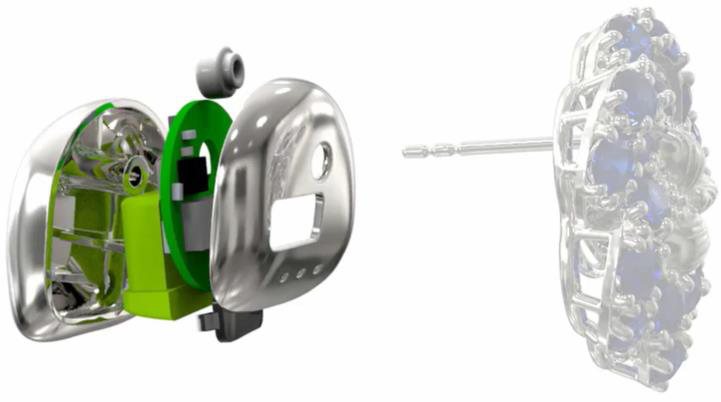
Exploded CAD view of the Ear-O-Smart wearable module beside a rendered earring

A universal smart backing that turns existing post-style earrings into a discreet fitness tracker — optical heart-rate sensing, Bluetooth LE and a companion app, engineered into a package smaller than a dime. The unfinished business from the Ear-O-Smart patent, ten years on.

WearablesEmbedded HWBLEOptical HR
shopjoule.com →

And this site, end to end.

ravinder.io runs on PHP and MySQL I wrote myself. The booking system below is mine — availability rules, Google Calendar busy-sync via iCal, .ics invites generated and mailed by a dependency-free SMTP client, cancellation flows that revoke the calendar event. So is the CRM behind the contact form, and the first-party visitor analytics. No Calendly, no form service, no third-party tracker, no analytics vendor. Nobody's data leaves this box.

The assumption is that buying it would have been faster. It wasn't. Building it natively with Claude Code took less time than wiring up and maintaining someone else's integrations — and I got exactly the scheduler I wanted instead of the one a vendor sells. That shift in build-versus-buy is the part of AI-assisted development I'd rather demonstrate than describe.

PHP · MySQLClaude CodeCustom schedulerSelf-hosted CRMFirst-party analyticsZero third parties
05  /  CAPABILITIES

What I actually do.

Capabilities, not a keyword list. The tools are underneath, separately, where they belong.

AI Product & Evaluation

Golden eval sets, confidence-threshold abstention with gap logging, per-tool latency budgets, and deciding where a model may act autonomously versus where a human must confirm.

Systems & Integration

Partner and platform integration via REST APIs and webhooks; designing for acknowledgment and observability rather than assumed delivery.

Partner & Stakeholder Management

Getting to shared instrumentation with external partners so SLAs are facts on a screen, and moving the conversation from incidents to trends.

Team & Commercial Ownership

Five cross-functional squads at Compass; pricing, budget and P&L as explicit KPIs on a $30M consumer portfolio at CWD and a product line at ecobee.

Electronic Hardware & NPI

Taking products from concept through EVT, DVT, PVT and field trials to mass production — including BOM optimization, regulatory certification and design-for-supply-resilience.

Engineering Foundation

PLC and HMI controls, schematic review, embedded systems debugging, and enough Python, SQL and C++ to read the code and prototype before writing the PRD.

Tools & technologies

PythonSQLC++PHP Next.js / ReactGitHubClaude CodeLangfuse YOLODeepSORTGoogle CoralMCP AltiumSolidWorks3D printingPCB prototyping LookerPendoFigmaMiro JiraConfluenceProductboard
06  /  PRESS

Featured in

Coverage from the wearables era — Ear-O-Smart and the BioSensive years.

"This idea is pretty fundamental to the future success of the wearables market."
ForbesInterview with Ravinder Saini
Read the article →
"Taking a look at who is disrupting the industry."
BNN NewsLive TV interview
"Saini hopes by tracking daily activities people will make healthier choices."
CBC NewsInterview with Ravinder Saini
Read the article →
07  /  CONTACT

Let's talk.

Open to Director and Senior Product roles in Toronto or remote. Book directly on my calendar, or send a note — both land with me, not with a service.